Finally Know Where Your Money Actually Goes
I used to think checking my bank balance was the same thing as understanding my finances. It’s not. A balance tells you what’s sitting there right now. It doesn’t tell you what’s about to leave, what’s still owed to you, or whether next month is going to be tight before it even starts. That’s the gap a cash flow calculator fills, and once you start using one, it’s a little hard to go back to guessing.
This isn’t complicated math. It’s just organizing numbers you probably already have, in a way that finally makes sense.
So What Is a Cash Flow Calculator, Really?
Strip away the finance-speak and it’s this: a way to add up everything coming in, subtract everything going out, and see what’s left. That’s it. No spreadsheets with forty tabs, no accounting degree required.
The reason it’s useful isn’t the math itself — a kid could do the arithmetic. It’s that most of us never actually sit down and do it. We feel like money is tight, or things feel fine, and we go off that feeling instead of the numbers. A cash flow calculator replaces the feeling with a fact.
The Formula, Such As It Is
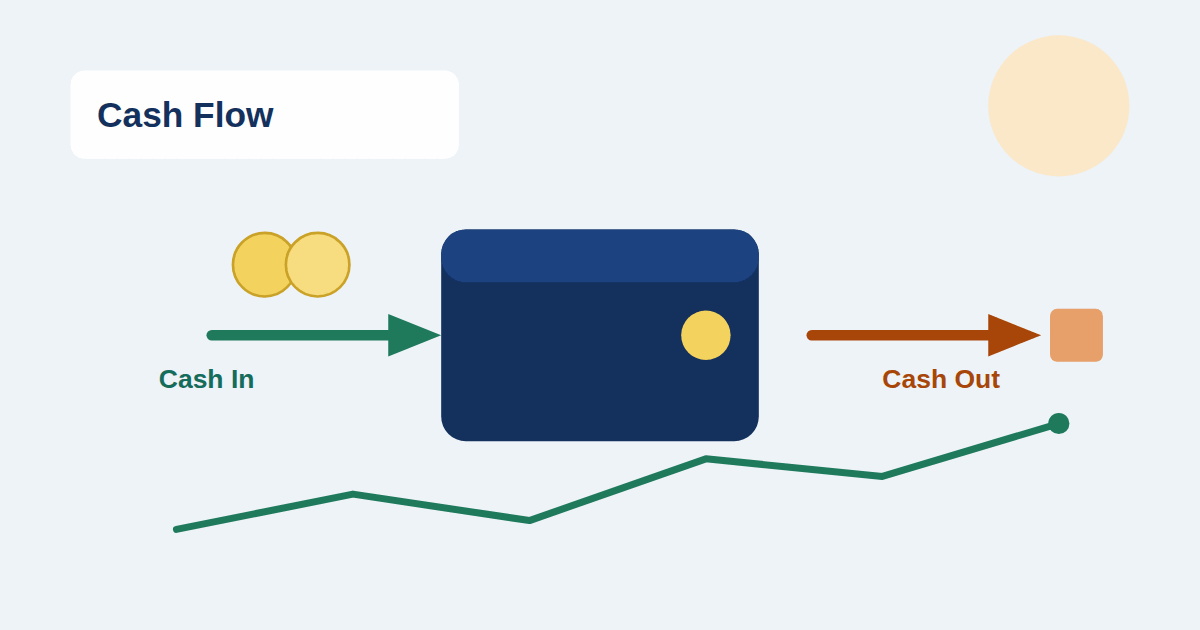
Net Cash Flow = Cash In − Cash Out.
Cash in is anything that lands in your account — your paycheck, client payments, sales, refunds, interest. Cash out is anything that leaves it — rent, payroll, your card processing fees, that software subscription you forgot you were still paying for. Add up one side, add up the other, subtract. If the number’s positive, you’re building a cushion. If it’s negative, you’re burning through one, whether you realize it or not.
Why This Actually Matters (Beyond the Obvious)
Here’s something that surprises a lot of people: you can be profitable and still run out of money. It sounds like a contradiction, but it happens constantly, especially with small businesses. You land a big client, the invoice says $8,000, everyone’s thrilled — and then payroll is due in ten days and that invoice isn’t getting paid for sixty. On paper, you made money. In your actual bank account, you’re short.
That’s a timing problem, not a profit problem, and it’s exactly the kind of thing a normal profit-and-loss statement won’t warn you about. Cash flow will.
Once you’re actually tracking it, a few things tend to happen. You stop getting blindsided by expenses you technically knew were coming but somehow forgot about. You get better at telling the difference between “I can afford this” and “I can afford this right now.” And when something bigger comes along — hiring someone, buying equipment, taking on a new lease — you’re making that call with real numbers instead of a gut feeling and some optimism.
A Real-Looking Example
Let’s say you’re running a small online shop. A fairly ordinary month might look something like this:
| Category | Amount |
|---|---|
| Sales revenue | $12,000 |
| Other income (interest, refunds) | $300 |
| Total Cash In | $12,300 |
| Inventory and supplies | $4,500 |
| Rent and utilities | $1,800 |
| Payroll | $3,200 |
| Marketing and software | $900 |
| Total Cash Out | $10,400 |
| Net Cash Flow | $1,900 |
Ends the month $1,900 ahead. Not a fortune, but it’s real, and it’s the kind of number that tells you whether you can actually afford that new hire you’ve been putting off, or whether it’s better to wait another quarter. Flip a couple of those expense numbers higher, or push a few sales into next month, and that $1,900 disappears fast. That’s the whole point of running the numbers instead of eyeballing it.
The Three Flavors of Cash Flow
Operating Cash Flow
This is the money your actual, everyday business brings in — sales, service fees, the normal stuff — minus the normal stuff it costs to run. If this number is consistently ugly, that’s worth paying attention to, because it means the core business isn’t really supporting itself.
Investing Cash Flow
This is money tied up in bigger, longer-term stuff — buying a piece of equipment, selling off an old asset, that sort of thing. It moves around a lot less often but can swing hard in one direction when it does.
Financing Cash Flow
This is anything related to how the business is funded — loans coming in, loan payments going out, an owner putting in extra cash, or pulling some out. It tells you how much the business is leaning on outside money versus standing on its own.
Getting the Most Out of Doing This
A calculator’s only as good as what you feed it, so a few things are worth doing right from the start. Count everything, even the small or embarrassing stuff — that $15 app you signed up for two years ago and never canceled adds up more than people expect. If you’re self-employed, keep personal and business money separate in your head, even if the account technically mixes them. And don’t just do this once. The number that matters isn’t this month’s snapshot, it’s the trend over four or five months, because that’s what actually tells you where things are heading.
Where People Usually Trip Up
The most common mistake, by far, is treating profit and cash flow like they’re the same thing. They’re not, and mixing them up is how businesses get caught off guard. Right behind that is forgetting about expenses that don’t show up every month — an annual software renewal, insurance, that kind of thing — and then being surprised when they hit. And a lot of people only look at their cash flow after something already feels wrong, which is a bit like checking the smoke detector after the fire’s already started.
A Few Things That Actually Help
Send invoices the moment work is done, not whenever you get around to it — the sooner it goes out, the sooner it gets paid. If a supplier will give you better payment terms, ask; the worst they say is no. Keep a small cushion set aside for the inevitable slow month, because there’s always one coming. And go through your recurring charges every few months — most people find at least one thing they’re still paying for out of habit rather than need.
Questions People Actually Ask
What does a cash flow calculator actually tell me?
It shows you the real difference between the money coming in and the money going out over a given stretch of time, so you know whether you’re ahead, behind, or roughly breaking even.
Isn’t positive cash flow just another word for profit?
No, and this trips a lot of people up. Profit is what’s left on paper after expenses. Cash flow is what’s actually moved through your account. You can be profitable and still be short on cash if your customers are slow to pay.
How often should I actually check this?
Monthly works for most people. If your income is unpredictable or seasonal, checking weekly will save you from more than a few surprises.
What counts as a “good” cash flow number?
There’s no single magic number — it depends on your expenses and how steady your income is. What matters more is consistency: staying positive month after month, not just getting lucky once.
Will this actually help me build a better budget?
Yes, more than most budgeting advice out there. Once you can see exactly where your money’s coming from and where it’s leaking out, building a realistic budget stops being a guessing exercise.
The Short Version
A cash flow calculator isn’t going to make hard decisions for you. What it does is take away the guesswork, so when you do make a decision — hire someone, hold off on a purchase, chase down a late invoice — you’re doing it with real numbers behind you instead of a hunch. Give it fifteen minutes a month and it’ll tell you more about your actual financial position than a bank balance ever will.